
Commercial Roofing Contractors Mount Angel, OR
Service AreasServing Salem and the central Willamette Valley
Request a Roof Assessment
Commercial roofing in Salem, Oregon
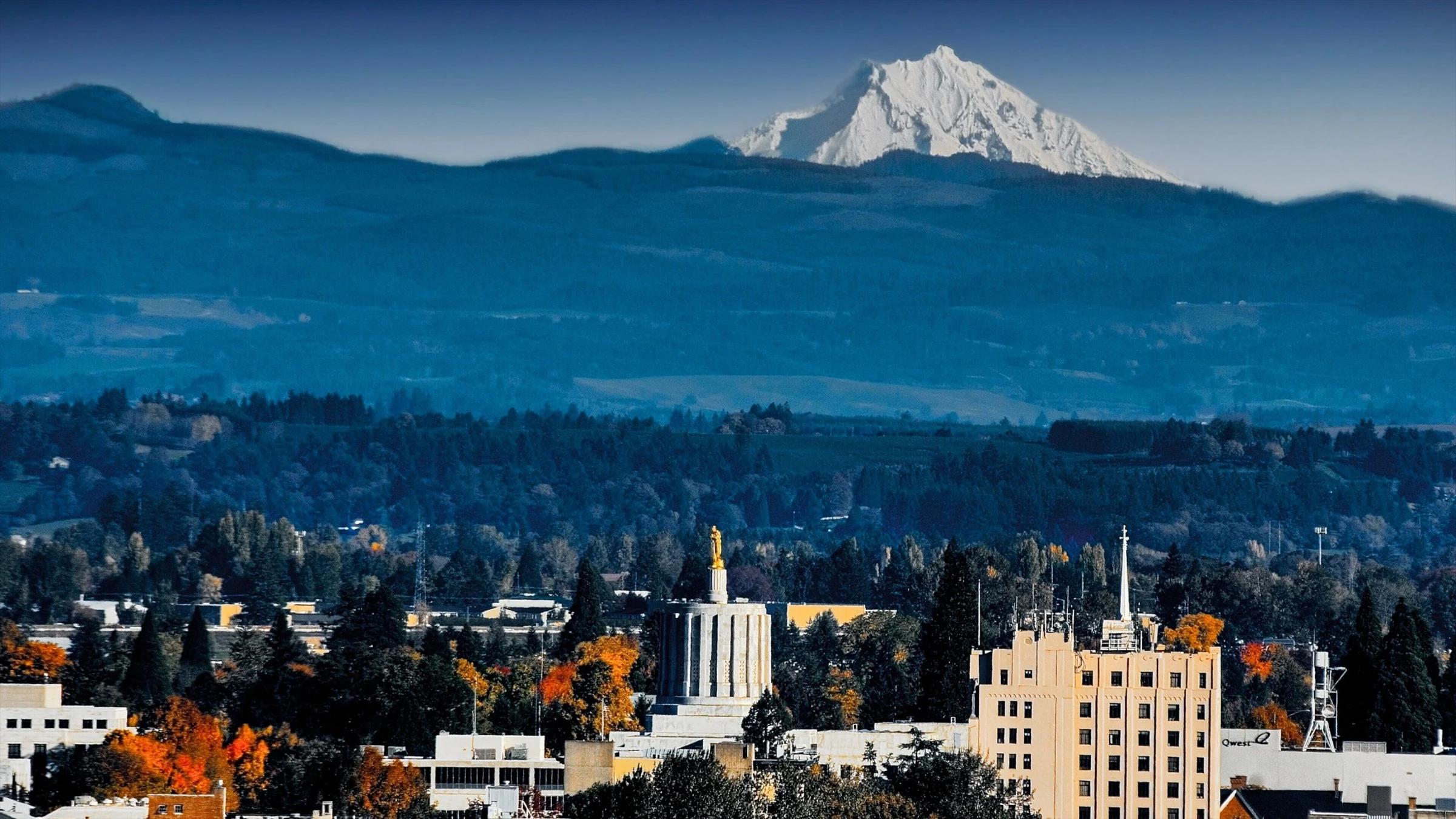
Commercial roofing contractors serving Mount Angel, OR with commercial roof repair, replacement, coatings, maintenance programs, inspections, and documented roof reports.
Commercial Roofing Assessment Framework
Document
Membrane and seams
Trace
Drainage and water paths
Review
Flashings and penetrations
Compare
Repair, recover, coating, replacement
Plan
Access, staging, weather protection
Protect
Occupants, equipment, and operations
Close Out
Photos, details, records, priorities
Commercial Roofing Contractors Mount Angel, OR: Roofing Detail
Commercial Roofers in Mount Angel
For commercial properties in Mount Angel, the defensible choice between repair, restoration, and replacement starts with roof-system condition, moisture findings, drainage performance, and remaining service life. Mount Angel carries more roofing variety than its size suggests. Ag service buildings sit close to downtown storefronts, and the hill above town holds the Mount Angel Abbey and seminary campus, an institutional roofing presence unlike anything else in the immediate area. We treat those as genuinely different roof problems rather than applying one standard approach across the whole town.
The town's compact footprint means these three property types sit within a short distance of each other, which is unusual for the surrounding valley. Most nearby towns are dominated by one building type. Mount Angel's roofing needs are genuinely mixed, and an owner benefits from a contractor who's comfortable moving between a storefront patch job and a campus assessment in the same afternoon.
Ag Service Buildings Near Downtown
The ag service operations near Mount Angel's core run practical metal-building roofs, often with equipment bays that see heavy vehicle and forklift traffic underneath. Roof penetrations for exhaust venting and equipment mounts get added over the years without always being re-flashed properly, and that's where we find most of the active leaks in this part of town.
We trace penetration flashing history before assuming a leak is a membrane problem, since a poorly re-flashed vent is a cheaper and faster fix than a full section replacement.
Downtown Storefront Roofs and Oktoberfest Season
Mount Angel's downtown storefronts see a heavy but short burst of foot traffic and vendor activity during Oktoberfest each fall, and that means any roof issue affecting a storefront needs a fast, contained fix rather than a project that drags into the festival weeks. Owners here plan around that calendar, and roofing work should too.
We schedule non-emergency storefront roof work outside the festival window whenever the owner can wait, and we prioritize emergency response differently in the weeks around it.
Institutional Roofing at the Abbey and Seminary Campus
The Benedictine abbey and seminary buildings on the hill represent a different category of roof entirely: older institutional construction, steep and low-slope sections often combined on the same structure, and roof access that has to respect an active religious and educational community. Work up there moves at a different pace, with more attention to noise, access timing, and protecting interior spaces that see regular use.
We approach institutional roof assessments there the way we would any large campus building, documenting condition section by section rather than treating the whole roof as one uniform system.
Wet-Season Drainage Across a Hillside Town
Mount Angel's terrain slopes noticeably from the abbey hill down toward the valley floor, and that grade change affects how water moves off commercial roofs and where it collects afterward. Downspouts tied into undersized ground drainage back up faster here during heavy rain than they would on flat ground.
One Small Town, Three Very Different Roof Populations
Few towns this size ask a roofing contractor to move between three distinct property types in the same week: a downtown storefront strip, working ag buildings, and a large institutional campus. Each comes with its own priorities, whether that's a fast turnaround for a merchant before a festival weekend, honest scope for a small ag shop, or careful scheduling around an active seminary calendar.
We keep separate maintenance notes for each property type in Mount Angel rather than applying one standard checklist across all of them, because a checklist built for a storefront roof misses what actually matters on the abbey's older sections, and vice versa.
That distinction shows up most clearly at estimate time. A storefront repair quote reads differently than an institutional roof assessment, and owners here get more value from a plan that reflects which of the three categories their building actually falls into.
Owners moving between these categories, a merchant who also holds a small ag storage building, for instance, benefit from working with a contractor who already understands both, rather than explaining the building's use case from scratch every time a roof problem comes up.
- Poorly re-flashed equipment and vent penetrations
- Storefront leaks needing fast containment before events
- Aging institutional roof sections with mixed slopes
- Downspout backup on hillside-graded lots
- Moss buildup on shaded north-facing slopes
- Fastener corrosion on older ag building roofs
Questions Mount Angel Building Owners Ask
Can storefront roof repairs happen quickly before Oktoberfest?
We prioritize contained, fast repairs for storefronts in the weeks leading into the festival, since a downtown business can't afford roof work disrupting its busiest stretch of the year.
How is institutional roofing different from a typical commercial roof?
Institutional buildings often mix roof types and ages on one structure, and work has to respect an active campus schedule, which usually means more coordination and a section-by-section approach rather than one blanket fix.
Why do ag building roofs near downtown leak at the penetrations first?
Vent and equipment penetrations added after original construction are frequently re-flashed inconsistently, and that's the most common failure point we find before the membrane itself shows wear.
Does the hillside grade affect roof drainage design?
Yes. Downspouts sized for flat-lot drainage can back up faster on a graded site, so we check ground-level drainage capacity as closely as the roof itself.
Is moss a real concern on Mount Angel's shaded roof slopes?
It is. North-facing slopes near tree cover stay damp longer through the wet season, and moss buildup there traps moisture against the membrane or panel seams.
Assessment Priorities
Membrane condition, seams, flashings, penetrations, drains, scuppers, edge metal, rooftop equipment, traffic patterns, and visible moisture evidence are reviewed together before a repair, coating, recover, or replacement path is recommended.
Planning Around the Facility
Access, staging, noise, odor, delivery windows, weather protection, occupied spaces, interior protection, and daily dry-in procedures are planned for the way the commercial property must continue operating.
From Findings to a Clear Scope
Observed conditions are documented so building owners and facility teams can compare immediate repairs, maintenance priorities, system options, budget timing, and closeout requirements without losing sight of the building below the deck.
Ready to review the roof scope?
Service Areas
1 of 2
Commercial Roofing Contractors Albany, OR
Commercial roofing contractors serving Albany, OR with commercial roof repair.
Commercial Roofing Contractors Keizer, OR
Commercial roofing contractors serving Keizer, OR with commercial roof repair.
Commercial Roofing Contractors Woodburn, OR
Commercial roofing contractors serving Woodburn, OR with commercial roof.
Commercial Roofing Contractors Millersburg, OR
Commercial roofing contractors serving Millersburg, OR with commercial roof.Commercial Roofing Across the Salem Area