Modified Bitumen SBS Roofing in Salem, OR
Roof SystemsServing Salem and the central Willamette Valley
Request a Roof Assessment
Commercial roofing in Salem, Oregon
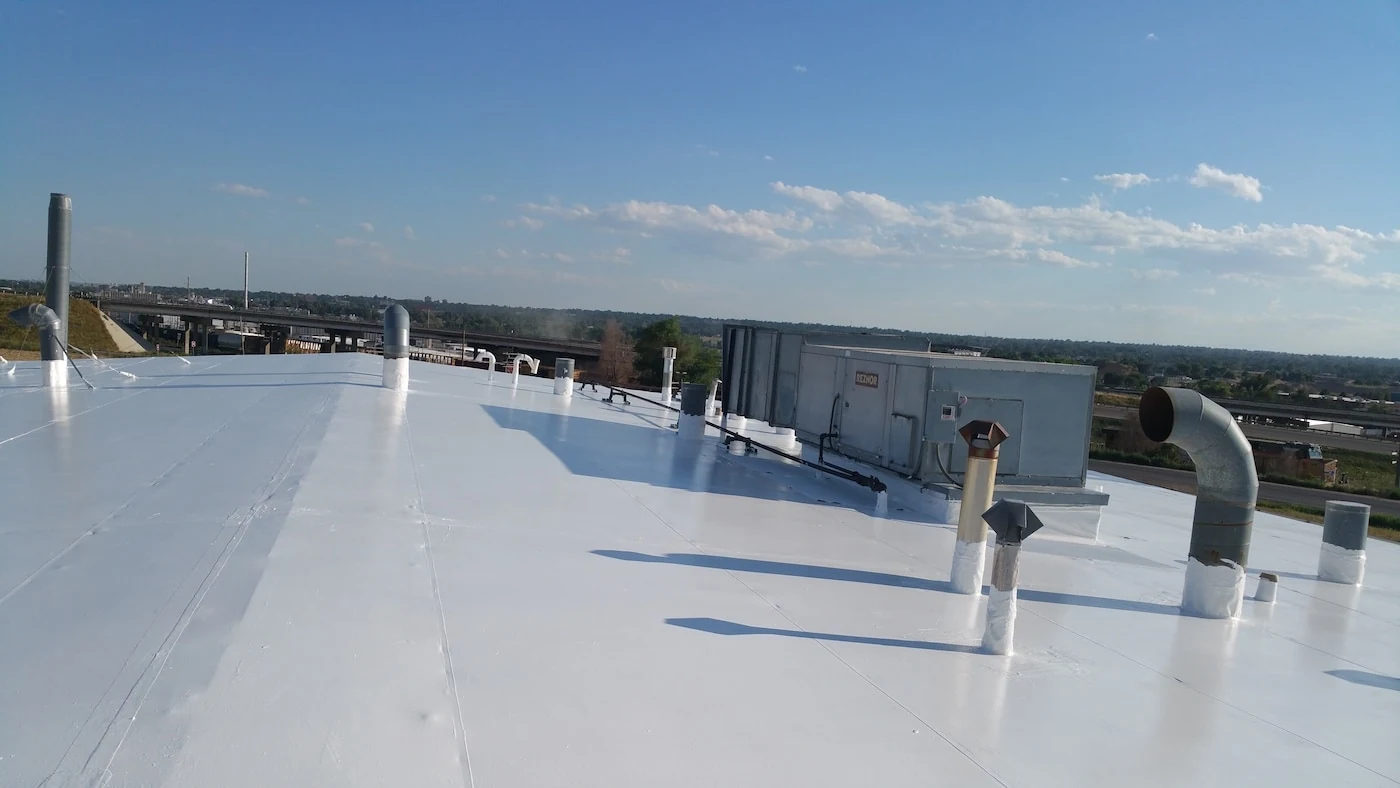
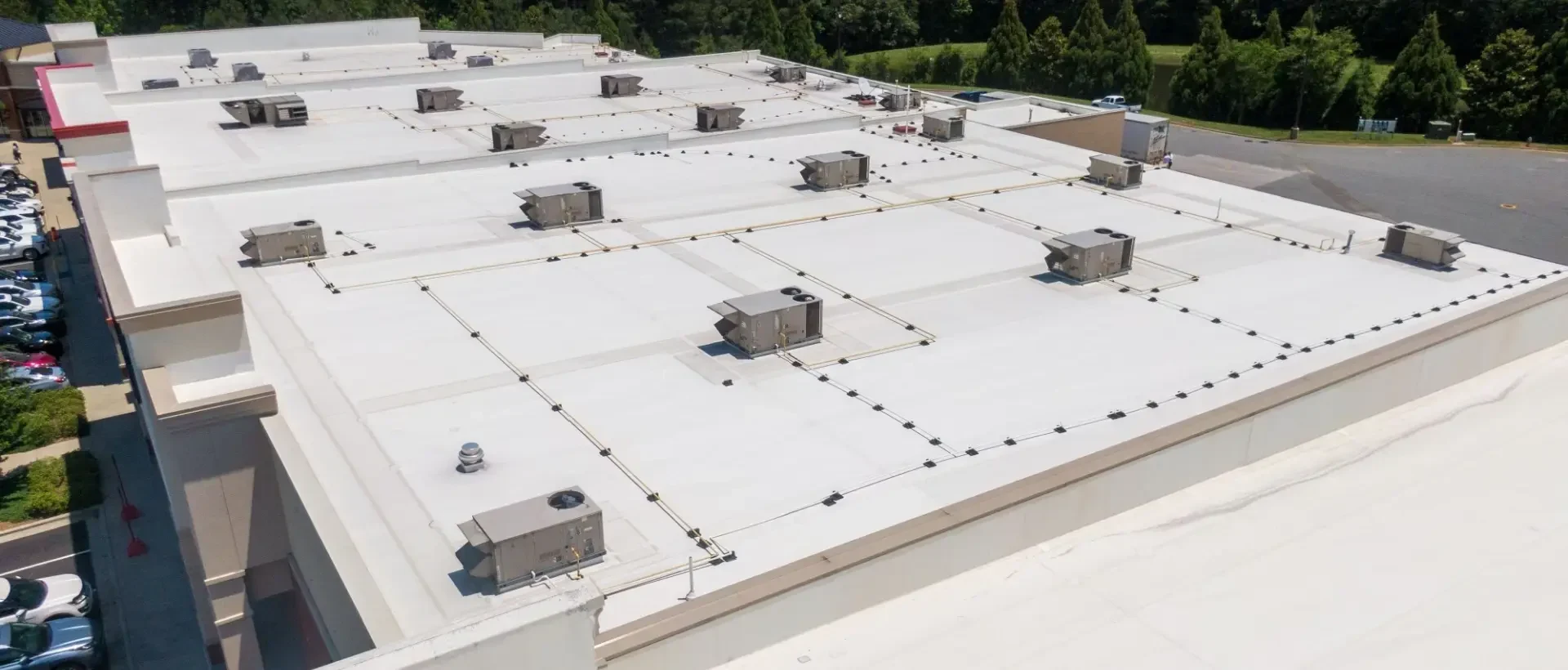
SBS modified bitumen roofing for Salem, Oregon government and institutional buildings, covering application methods and multi-ply wet-climate durability.
Commercial Roofing Assessment Framework
Document
Membrane and seams
Trace
Drainage and water paths
Review
Flashings and penetrations
Compare
Repair, recover, coating, replacement
Plan
Access, staging, weather protection
Protect
Occupants, equipment, and operations
Close Out
Photos, details, records, priorities
Modified Bitumen SBS Roofing in Salem, OR: Roofing Detail
Multi-Ply Redundancy for Salem's Older Government Roofs
A lot of Salem's older state and county buildings were built with roof assemblies that have complex parapets, multiple penthouse structures, and decades of piecemeal mechanical additions. SBS modified bitumen fits that kind of roof well because it's applied in layers rather than a single membrane sheet, which builds in redundancy that a single-ply system doesn't have around irregular geometry.
Why Multiple Plies Matter on Complex Roofs
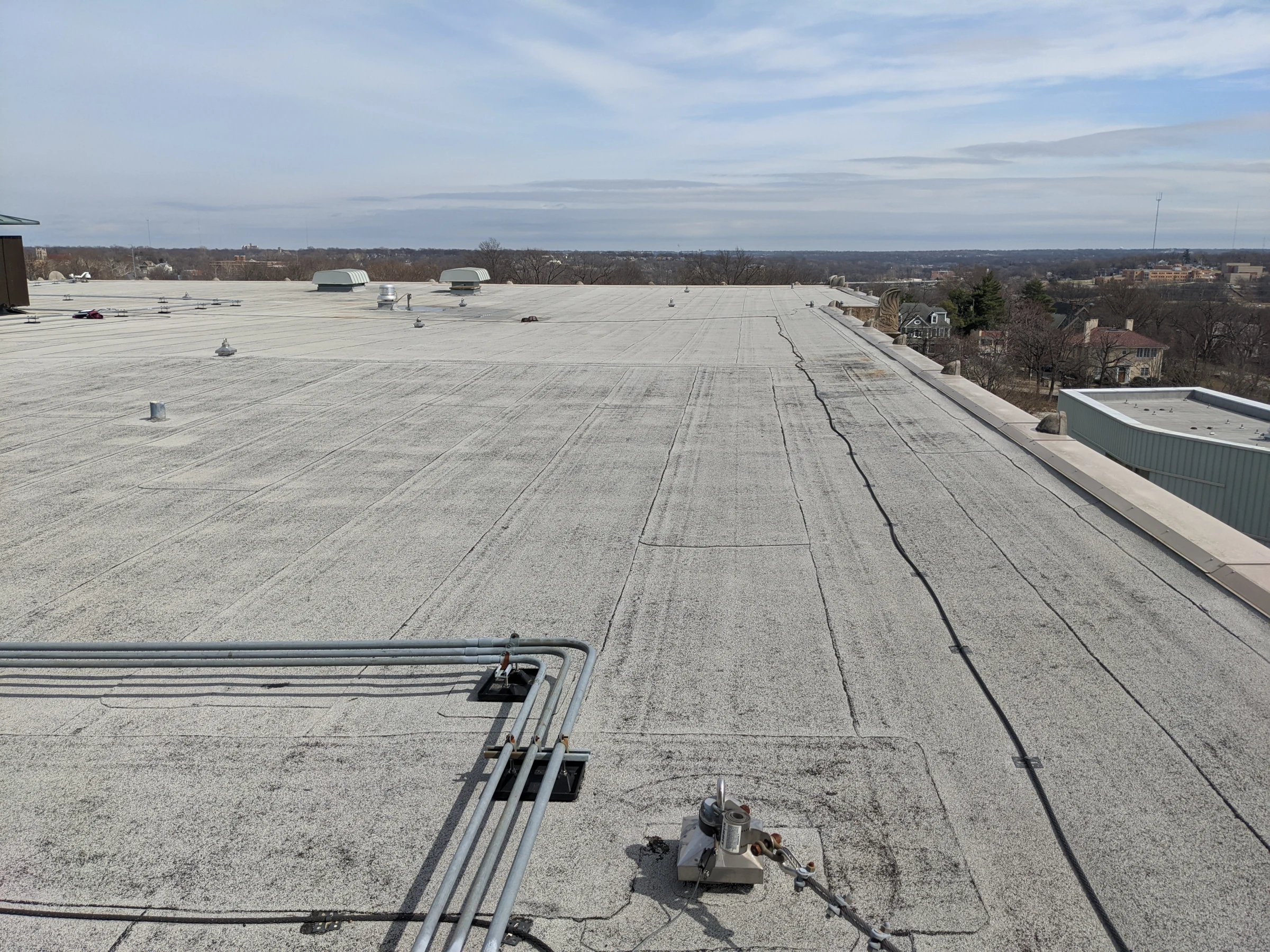
A modified bitumen system typically combines a base sheet with a granulated cap sheet, sometimes with an additional interply layer depending on the assembly. If one layer develops a weak point, a scuff during construction traffic, a small puncture years later, the layer beneath it is still providing a water barrier. On a straightforward, low-penetration roof that redundancy matters less. On a government building with forty years of rooftop antennas, HVAC retrofits, and re-flashed penetrations, it's real insurance.
Torch-Applied Versus Cold-Applied
Torch-applying modified bitumen, heating the underside of the sheet to bond it, gives a strong, proven bond but carries fire risk during installation, which matters on occupied downtown Salem buildings where a crew working near existing insulation and combustible materials needs real fire-watch discipline. Cold-applied and self-adhered modified bitumen systems avoid that open-flame risk entirely, trading some installation speed for a safer application process on occupied buildings. We evaluate which approach fits a given project based on occupancy, adjacent construction, and the building's specific fire-watch requirements rather than defaulting to one method.
How the System Handles Nine Wet Months
Modified bitumen's granulated surface sheds water well and the multi-ply assembly gives it inherent redundancy against the kind of slow seam seepage that plagues a single-layer system under constant moisture. The vulnerability point tends to be at seams and laps between sheets, and at flashing transitions around parapets and penetrations, exactly where a complex older roof has the most linear feet of detail work.
- Check that seam laps meet minimum overlap specifications at every joint, not only spot-checked areas
- Confirm flashing at parapet walls and penthouse bases uses compatible, properly lapped materials
- Ask whether the project uses torch or cold-applied methods and what fire-watch protocol applies
- Verify drain and scupper transitions are detailed as part of the roofing scope, not left to a separate trade
- Inspect granule coverage after installation, bare spots at seams are early wear points
Insulation Beneath the Membrane Matters Just as Much
On an older building, the insulation layer under a modified bitumen system has often absorbed decades of small amounts of moisture through minor, long-undetected leaks. Installing new membrane over saturated insulation traps that moisture and shortens the new roof's life regardless of how well the membrane itself performs. We check insulation condition, usually with a core sample or moisture scan, before committing to a recover versus a full tear-off on any older SBS reroof project.
Ponding on a Complex Roof
Older roofs with multiple additions often have drainage that was never redesigned as the building changed, leaving low spots that weren't part of the original plan. On a modified bitumen reroof, this is the point to correct slope with tapered insulation rather than reproduce the same ponding pattern under new material. Left uncorrected, standing water accelerates granule loss and seam degradation exactly where the roof already has the most complexity to manage.
Ice Storm Exposure on Parapet-Heavy Roofs
Complex roofs with tall parapets and multiple roof levels catch more ice and snow accumulation during the valley's occasional freeze events than a simple flat roof does. Flashing details at parapet transitions need to tolerate that freeze-thaw cycling without cracking, which is another reason multi-ply redundancy earns its cost on this kind of building.
Maintenance Over the Building's Life
Modified bitumen roofs respond well to targeted repair rather than full replacement when a problem is caught early, a torn section can often be patched with a compatible material without disturbing the surrounding roof. That repairability matters on a government building where budget cycles favor smaller maintenance line items over large capital replacement projects.
Sequencing Around Occupied Downtown Buildings
A modified bitumen reroof on an occupied state office building or courthouse annex near the capitol core has scheduling constraints that a vacant industrial building doesn't. Torch work near operable windows, fresh-air intakes, or pedestrian entries needs coordination with building management beyond the roofing crew's own fire-watch protocol, and material staging on a downtown roof with limited crane access or rooftop clearance takes more planning than a suburban warehouse with a wide-open parking lot for staging.
We sequence these projects section by section specifically so a building stays weathertight and operational the entire time, which matters more on a facility that can't simply close for two weeks. That section-by-section approach also limits how much open roof is exposed to a sudden weather change mid-project, which is a real risk on a jobsite that has to work around Salem's rain pattern rather than a predictable dry season.
Modified Bitumen Questions From Building Managers
Is torch-applied modified bitumen safe on an occupied building?
With proper fire-watch protocol and coordination it's a standard, widely used method, though cold-applied alternatives remove the open-flame risk entirely.
How does modified bitumen compare to a single-ply membrane for an older, complex roof?
The multi-ply redundancy generally handles irregular geometry and accumulated penetrations better than a single membrane sheet.
Can a damaged section be repaired without replacing the whole roof?
Often, yes. Localized modified bitumen repairs are one of the system's practical advantages over some single-ply systems.
Does modified bitumen need a protective coating?
A granulated cap sheet provides its own UV protection, though a reflective coating can be added depending on the building's energy goals.
How does the system handle the valley's occasional ice storms?
Well, provided flashing details at parapets and transitions are built to tolerate freeze-thaw cycling rather than rigid, brittle detailing.
Assessment Priorities
Membrane condition, seams, flashings, penetrations, drains, scuppers, edge metal, rooftop equipment, traffic patterns, and visible moisture evidence are reviewed together before a repair, coating, recover, or replacement path is recommended.
Planning Around the Facility
Access, staging, noise, odor, delivery windows, weather protection, occupied spaces, interior protection, and daily dry-in procedures are planned for the way the commercial property must continue operating.
From Findings to a Clear Scope
Observed conditions are documented so building owners and facility teams can compare immediate repairs, maintenance priorities, system options, budget timing, and closeout requirements without losing sight of the building below the deck.
Ready to review the roof scope?
Roof Systems
1 of 2
Commercial Roofing Across the Salem Area