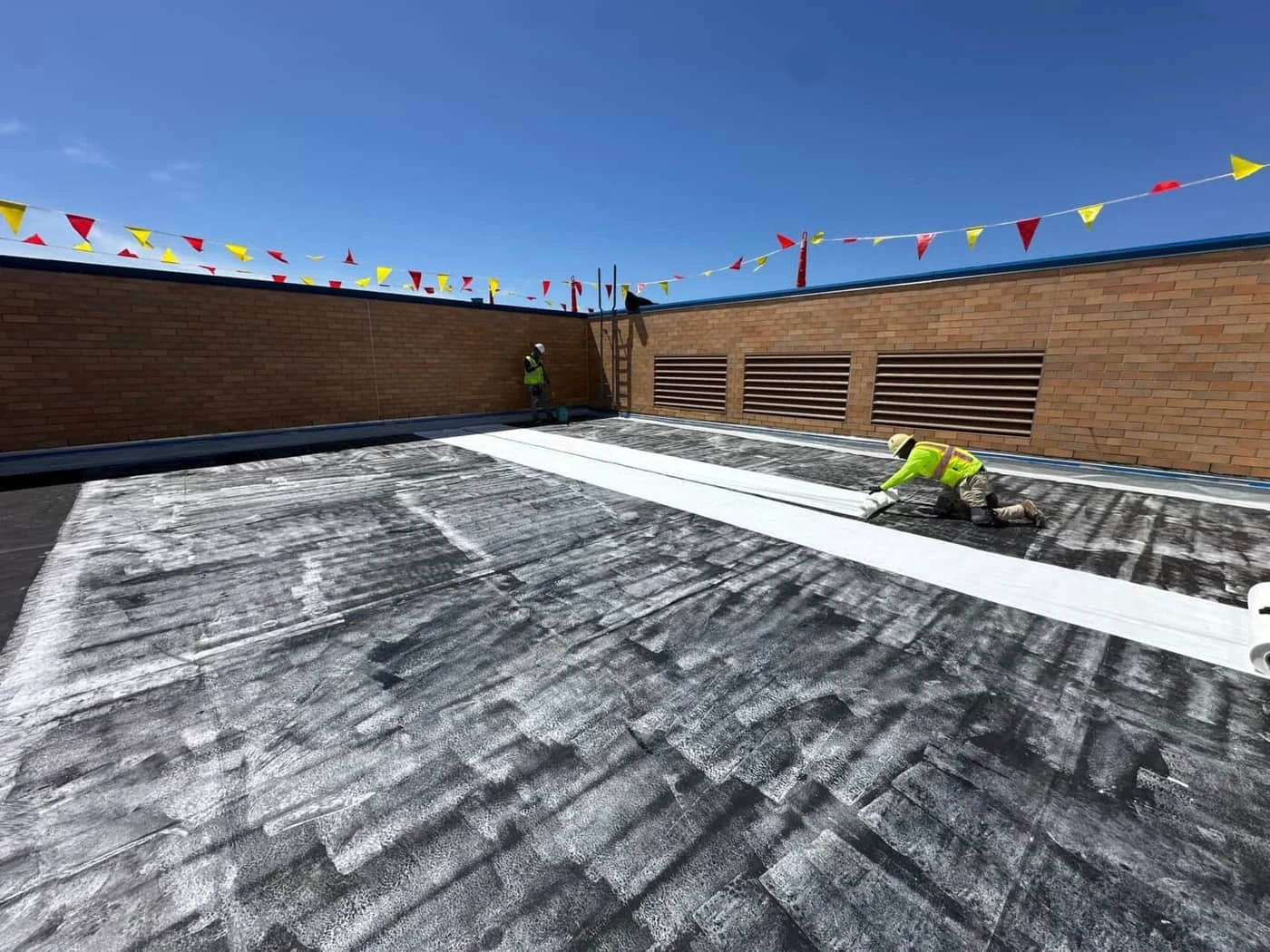
Commercial Roof Leak Repair in Salem
Commercial Roofing ServicesServing Salem and the central Willamette Valley
Request a Roof Assessment
Commercial roofing in Salem, Oregon
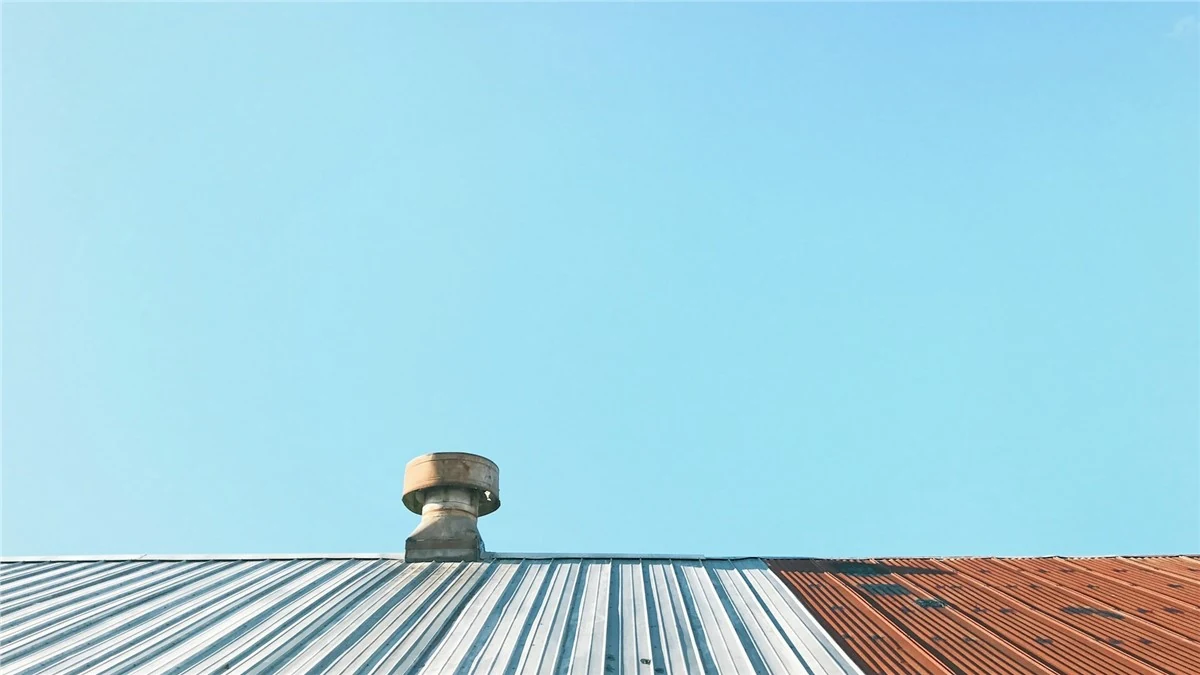

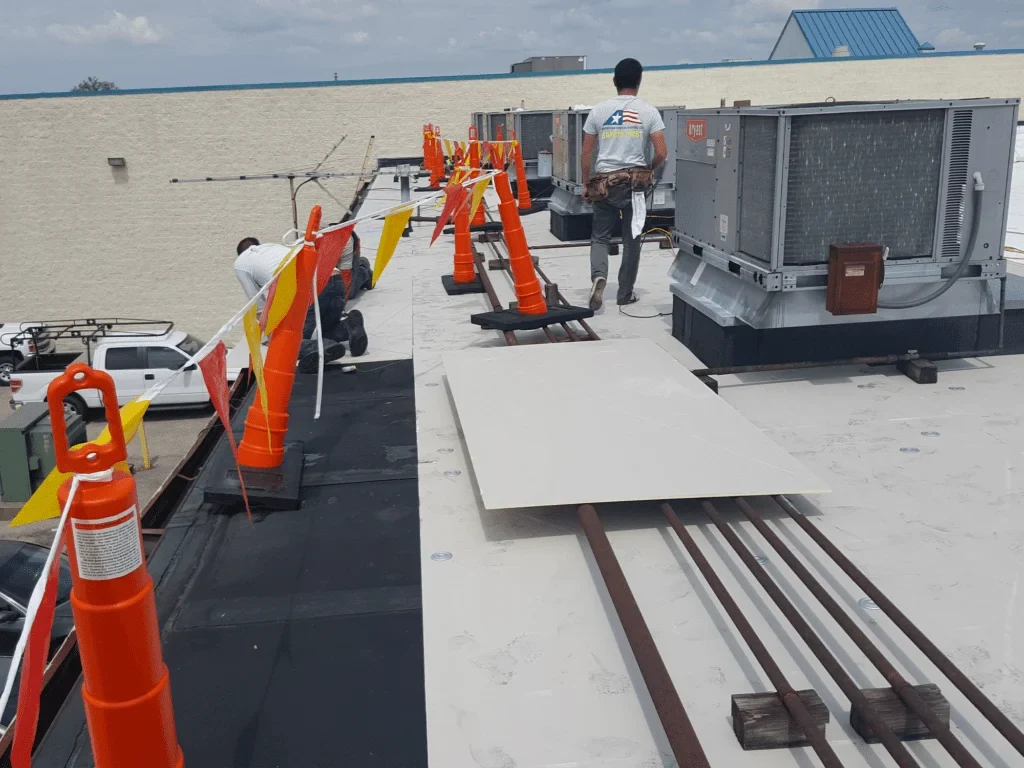
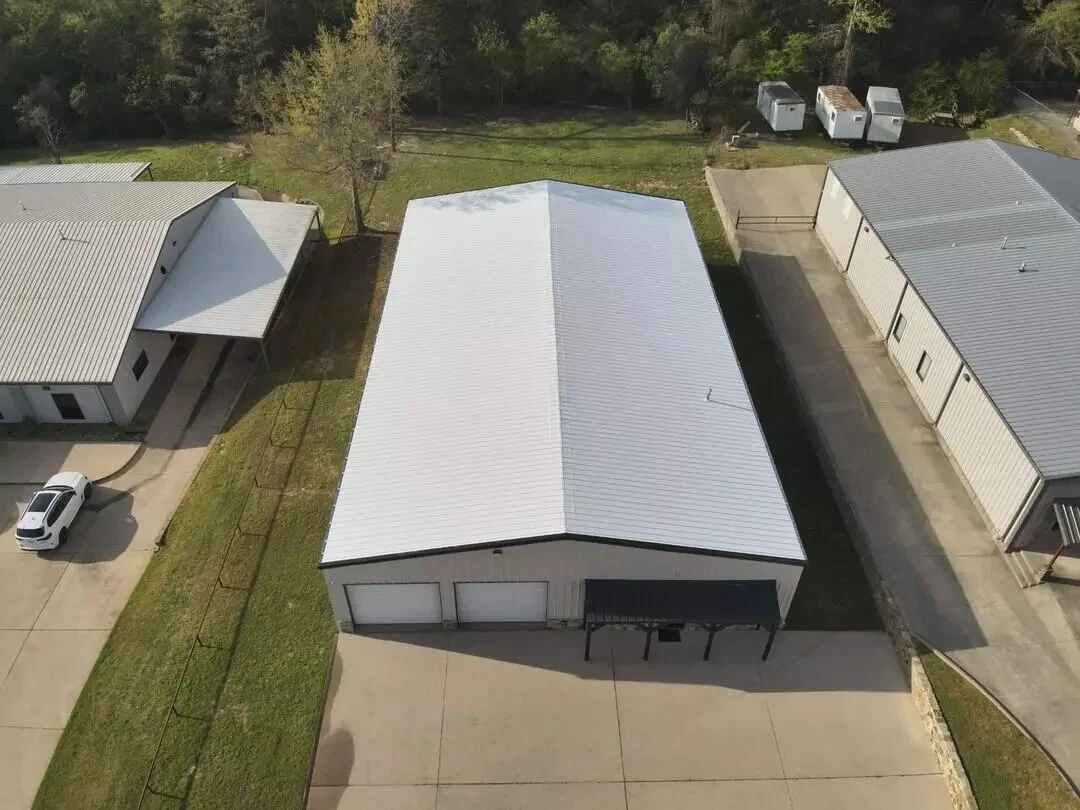
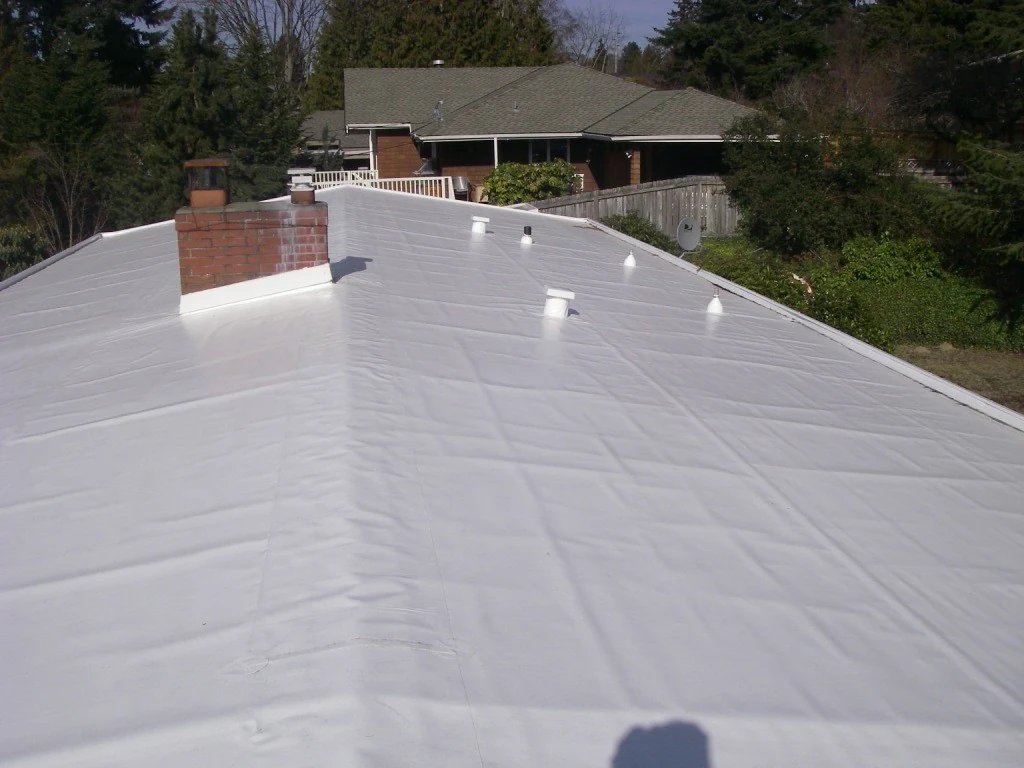
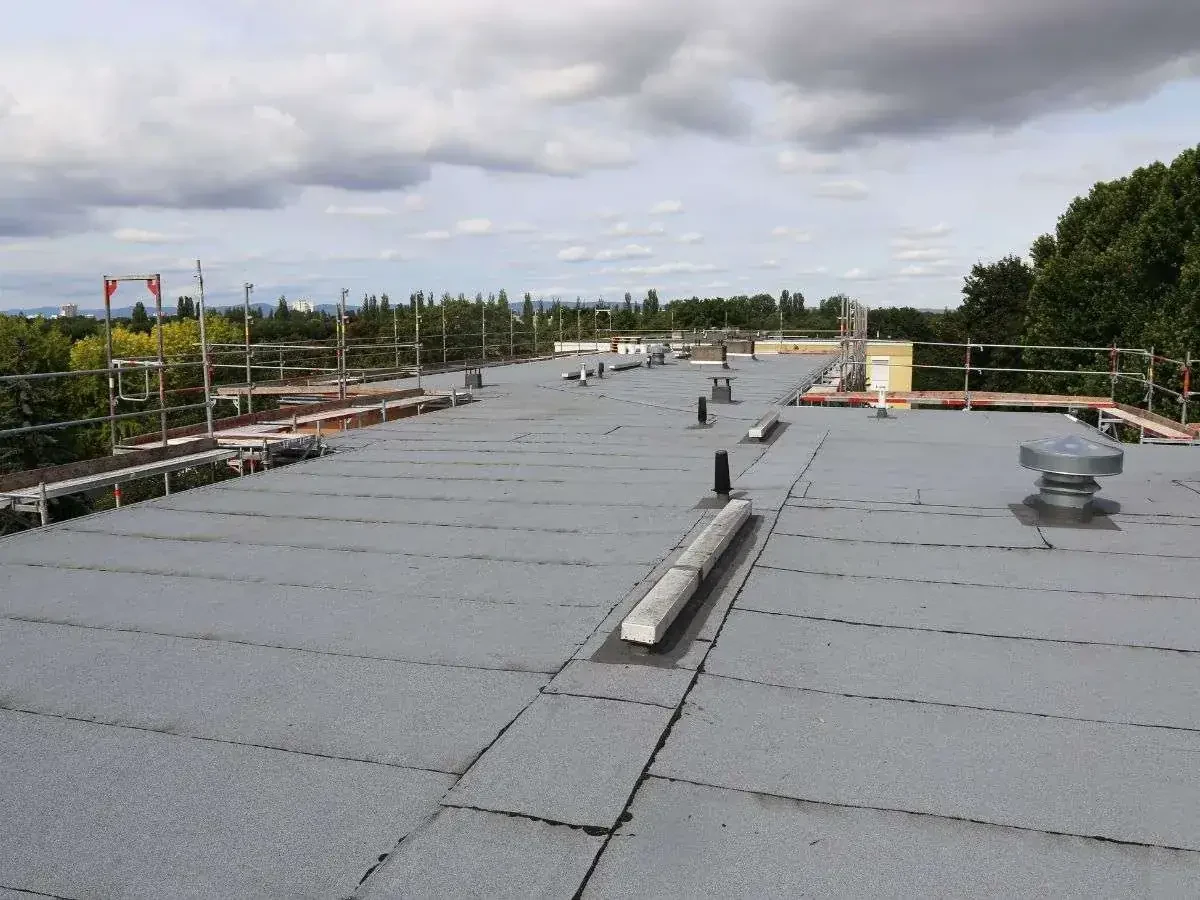
The scope documents leak sources, repair boundaries, photos, and priorities so Salem owners can separate immediate stabilization from longer-term capital work.
Commercial Roofing Assessment Framework
Document
Membrane and seams
Trace
Drainage and water paths
Review
Flashings and penetrations
Compare
Repair, recover, coating, replacement
Plan
Access, staging, weather protection
Protect
Occupants, equipment, and operations
Close Out
Photos, details, records, priorities
Salem Roof Decision Guide
The scope documents leak sources, repair boundaries, photos, and priorities so Salem owners can separate immediate stabilization from longer-term capital work. A leak fixed this week is a line item on a repair invoice. The same leak, left through another wet season, turns into a saturated insulation replacement, a deck repair, and whatever it costs you downstream once water finds its way into occupied space. We walk owners through that difference at the estimate stage, before a decision gets made by default because nobody made one on purpose.
The Nine-Month Window Salem Owners Don't Get to Ignore
In a lot of the country, a leak that shows up in October can wait for a spring repair without much consequence. That math doesn't work here. Willamette Valley rain runs close to nine months a year, so a leak that starts small in the fall has an entire wet season to work on the roof deck and everything under it before anyone gets a dry day to fix it properly.
We tell owners this plainly because it changes the timeline for a decision, and the repair itself is only part of what's at stake. A "we'll get to it in spring" plan on a Salem roof usually means five or six months of continuous or near-continuous moisture exposure first, and that exposure is where the real cost gets built.
Moss and Clogged Drainage Convert a Maintenance Item Into an Emergency Call
Low-slope commercial roofs around Salem grow moss and algae fast, especially on shaded north-facing sections and anywhere near mature trees, which describes a lot of the older commercial blocks downtown. That growth doesn't just sit there. It holds water against the membrane for weeks after a storm passes and slowly works into seam laps that were built to shed water, not stay wet against it.
The same organic buildup clogs drains and scuppers gradually enough that nobody notices until a roof section that used to drain overnight is holding standing water for days. An owner who skips the fall drain cleaning isn't saving money. They're buying a January emergency call instead of an October maintenance visit, and the two invoices are rarely close to the same size.
Where a Small Leak Turns Into a Large Bill
The cost jump between "repair the leak" and "replace what the leak ruined" happens faster on a low-slope roof carrying constant moisture than most owners expect. Insulation board that's been wet for a season doesn't dry out and go back to work. It gets replaced, along with anything else the water reached on its way through.
Here's what actually drives the number up once a leak sits unaddressed through a wet season:
- Saturated insulation loses its R-value permanently and has to be torn out, not dried
- Deck-level rot or metal deck corrosion once moisture sits underneath the membrane for months
- Interior ceiling, drywall, and flooring damage in occupied space below the leak
- Mold remediation costs that follow prolonged moisture and show up as a separate invoice entirely
- Lost production time, closed clinical space, or blocked retail floor while repairs happen
- A patch that was supposed to hold now failing into a full section reroof instead of a repair
None of that is inevitable. It's what happens when a repair decision gets deferred past the point where the roof was still the only thing at risk.
State Buildings Run on a Budget Cycle the Roof Doesn't Respect
Government and institutional buildings around the Capitol Mall carry a different kind of risk than a private office. The roof doesn't wait for a procurement cycle, but the approval to spend money on it often does, and that gap between "we know it needs fixing" and "the funding is approved" is exactly where a contained leak turns into an insulation and deck problem.
We write our findings in a way a facilities manager can hand up the chain without translation: what's failing, what it's likely to cost if it waits another budget quarter, and what a stopgap repair can buy in the meantime while a larger scope moves through approval. That framing has gotten emergency work funded faster than a vague "roof needs attention" note ever does.
A Drip Over the Wrong Spot Is a Shutdown, Not a Maintenance Item
The dollar cost of a leak is only part of the decision. At a food-processing plant, water over an active production line isn't a repair queue item, it's a line stoppage and a food-safety question the moment anyone spots it, which changes how fast that repair needs to happen regardless of what else is scheduled that week.
The same logic applies on the Salem Health campus and at clinics nearby, where a leak over equipment or patient space can force a room out of service faster than the water damage itself would justify on a smaller building. We price and schedule those calls differently than a retail strip leak, because the actual cost an owner is managing isn't the roof repair, it's what happens downstream while the roof stays broken.
Owner Questions We Get Before a Leak Repair Gets Approved
Is it cheaper to wait until the dry season to fix a leak?
Almost never, in this climate. Waiting doesn't pause the damage, it extends the wet exposure that's causing it. What looks like savings on the repair invoice usually shows up later as an insulation or deck cost that wouldn't have existed if the leak had been closed in the fall.
How do I know if this is a simple repair or the start of a bigger budget conversation?
We look at whether it's an isolated failure or a pattern. A single seam or boot failure is usually a contained repair. A third call in the same section within a couple of seasons tells us the membrane's remaining life doesn't match the maintenance budget, and we say that directly instead of quietly billing another patch.
Will a delayed repair affect my roof warranty?
It can. Most commercial roof warranties require documented, timely repair of known leaks, and prolonged moisture damage from a deferred repair can fall outside what a manufacturer will cover. We document the repair and timeline for exactly that reason.
How does a government or institutional building get emergency roof funding approved faster?
A clear, specific finding moves faster than a general one. We write findings a facilities manager can escalate directly, with what's failing and what it costs to wait, rather than a vague inspection note that has to get re-explained at every level of approval.
Can a leak repair be rushed during active rain, or does that create new problems?
Rushing it usually does. Repair materials need workable, reasonably dry conditions to bond correctly, so we schedule around forecast windows even on an urgent call. A repair applied in active rain that doesn't bond is a cost with nothing to show for it.
A useful response starts before roof access
Before dispatch, collect the address, responsible building contact, safe access route, occupied area below the problem, time and behavior of the leak, known roof type, and any temporary protection already attempted at the Salem property. The caller should not be asked to diagnose the assembly from the floor. A short description of timing, location, volume, affected equipment, and previous occurrences is more useful than guessing which roof product failed. Clear intake notes reduce wasted roof time and prevent the handoff from losing urgent details. They also create the first event in the roof history that later inspections and repair records can reference.
Price the known work without hiding the unknowns
Pricing is easier to evaluate when the scope shows which conditions were measured, which were observed but not opened, and which remain concealed. Unit prices or allowances can address uncertainty without pretending the quantity is already known. Exclusions should not function as an escape hatch. Each exclusion needs a reason and, where practical, a defined way to resolve it through testing, access, document review, engineering, or a unit-price condition discovered during construction. A reviewable proposal lets ownership compare boundaries, evidence, materials, quantities, disruption, and closeout, not just totals. The goal is a scope that remains understandable after the salesperson leaves the room.
How Salem operating conditions shape the review
Weather around Salem, OR combines extended wet periods, wind, seasonal debris, cool-weather installation limits, and recurring drainage demand. The timing of that exposure can reveal a weak detail, yet the weather event and the leak source are not automatically the same thing. The review should connect the time and location of water entry with roof zones, elevations, drainage paths, and construction transitions. That map helps distinguish one isolated defect from several conditions activated by the same rainfall. A useful report does not hide uncertainty. It names the unverified areas, explains why they were inaccessible, and states which follow-up observation or test would resolve the question.
Build a roof record another decision-maker can use
For Commercial Roofing Contractors of Salem, the field file should capture the affected interior zone, roof-area map, repair history, membrane condition, wet-area indicators, photographs, test locations, and the exact limits of the proposed repair. Each note needs a roof-area reference so a photograph or recommendation can be found again after the visit. The practical method is to trace the water path from the interior evidence back through roof elevations, seams, penetrations, curbs, walls, edges, and drains instead of sealing the first suspicious detail. Where destructive or electronic testing is proposed, the scope should identify its purpose, limitations, and restoration procedure before work begins. Observed facts, recommended actions, completed work, and open items should never share one unlabeled list. Separating them lets an off-site approver see exactly what was authorized and what still needs a decision.
Do not force different roof systems into one repair assumption
A detail that is repairable on Modified Bitumen Systems may require different preparation or materials on Silicone Roof Coating or EPDM Black. Existing layers, surfacing, attachment, and earlier repair products matter before new materials are selected. Preparation and repair language must fit the substrate. Cleaning, drying, reinforcement, fastening, priming, welding, adhesion, and cure requirements should not be copied from one roof system to another without verification. The final comparison should show which materials can accept repair or restoration, which areas need removal, and which unknowns could change the scope. Product preference comes after those conditions are established.
Keep the occupied building in the scope
A technically correct detail is only part of the job at Salem properties such as Government Public Sector, Healthcare Systems, and General Contractors. The plan also has to protect people, inventory, equipment, and normal access below the roof. Document roof access, sensitive rooms and inventory, deliveries, public entrances, tenant hours, exhausts and air intakes, interior evidence, and the route used to move tools and debris. These conditions belong in the written scope before scheduling. Operating controls are roof-quality controls. Water, debris, odor, noise, or an unsecured access point can harm the owner even when the installed detail itself is correct, so those risks need owners and closeout checks.
Use condition thresholds instead of sales pressure
The recommendation must answer whether the defect is isolated, whether trapped moisture changes the scope, and whether continued spot repair remains defensible. An isolated repair, repair program, restoration, recover assembly, and full replacement solve different condition patterns and should not be presented as interchangeable price levels. Decision thresholds include moisture extent, remaining secure attachment, deck condition, prior repair performance, drainage, assembly compatibility, operational risk, budget timing, and the period the owner expects the roof to remain in service. This prevents an urgent call from becoming an automatic reroof pitch. It also prevents endless patches from consuming money on a roof whose moisture, failures, or lifecycle cost has crossed a reasonable replacement threshold.
Carry today's evidence into the next roof decision
The work becomes more valuable when it leads to an inspection that separates an isolated repair from restoration, recover, or replacement planning. A service call, inspection, and capital project should use one continuous property and roof-area history. For one building, that history makes the next visit faster and reveals whether a repair held. Across a portfolio, it lets ownership rank roofs by condition, operational risk, repair spending, and capital timing instead of reacting to the newest ceiling stain. Commercial Roofing Contractors of Salem can keep inspection and maintenance active while repair, restoration, or replacement moves through a separate project opportunity. The path remains response, evidence, the right scope, closeout, and the next scheduled roof decision.
Salem decision checklist
- Map the interior symptom to a named roof area before selecting a repair detail.
- Record temporary measures separately from permanent work and list every open item.
- Verify drainage, penetrations, walls, edges, earlier repairs, and transitions around the affected area.
- State the observed roof assembly, unknown construction, access limits, and testing assumptions.
- Connect the recommendation to repair, restoration, replacement, maintenance, or capital-planning thresholds.
- Set the next inspection or follow-up date so the roof history continues after this visit.
Commercial roof decision questions
Does this condition automatically mean the roof must be replaced?
No. The review should establish whether the defect is isolated, whether trapped moisture changes the scope, and whether continued spot repair remains defensible. Replacement becomes a defensible recommendation only when the field evidence, moisture, assembly condition, repair history, deck or attachment concerns, and lifecycle comparison support it.
What should the Salem roof scope document?
It should document the affected interior zone, roof-area map, repair history, membrane condition, wet-area indicators, photographs, test locations, and the exact limits of the proposed repair. It should also label temporary and permanent work separately, state assumptions and exclusions, and identify the inspection or service step that follows the current scope.
How does an urgent call become a maintenance or capital plan?
The immediate visit creates the first roof-area record. A follow-up inspection establishes condition and priorities. Completed repairs, recurring observations, drain service, warranties, and future recommendations are then retained so maintenance stays scheduled and larger work can be placed into the appropriate capital year.
From service call to roof plan
Use the next decision, not the biggest sale.
Stabilize the problem, document the roof, compare the viable paths, and keep the resulting roof history active.
Assessment Priorities
Membrane condition, seams, flashings, penetrations, drains, scuppers, edge metal, rooftop equipment, traffic patterns, and visible moisture evidence are reviewed together before a repair, coating, recover, or replacement path is recommended.
Planning Around the Facility
Access, staging, noise, odor, delivery windows, weather protection, occupied spaces, interior protection, and daily dry-in procedures are planned for the way the commercial property must continue operating.
From Findings to a Clear Scope
Observed conditions are documented so building owners and facility teams can compare immediate repairs, maintenance priorities, system options, budget timing, and closeout requirements without losing sight of the building below the deck.
Ready to review the roof scope?
Commercial Roofing Services
1 of 2
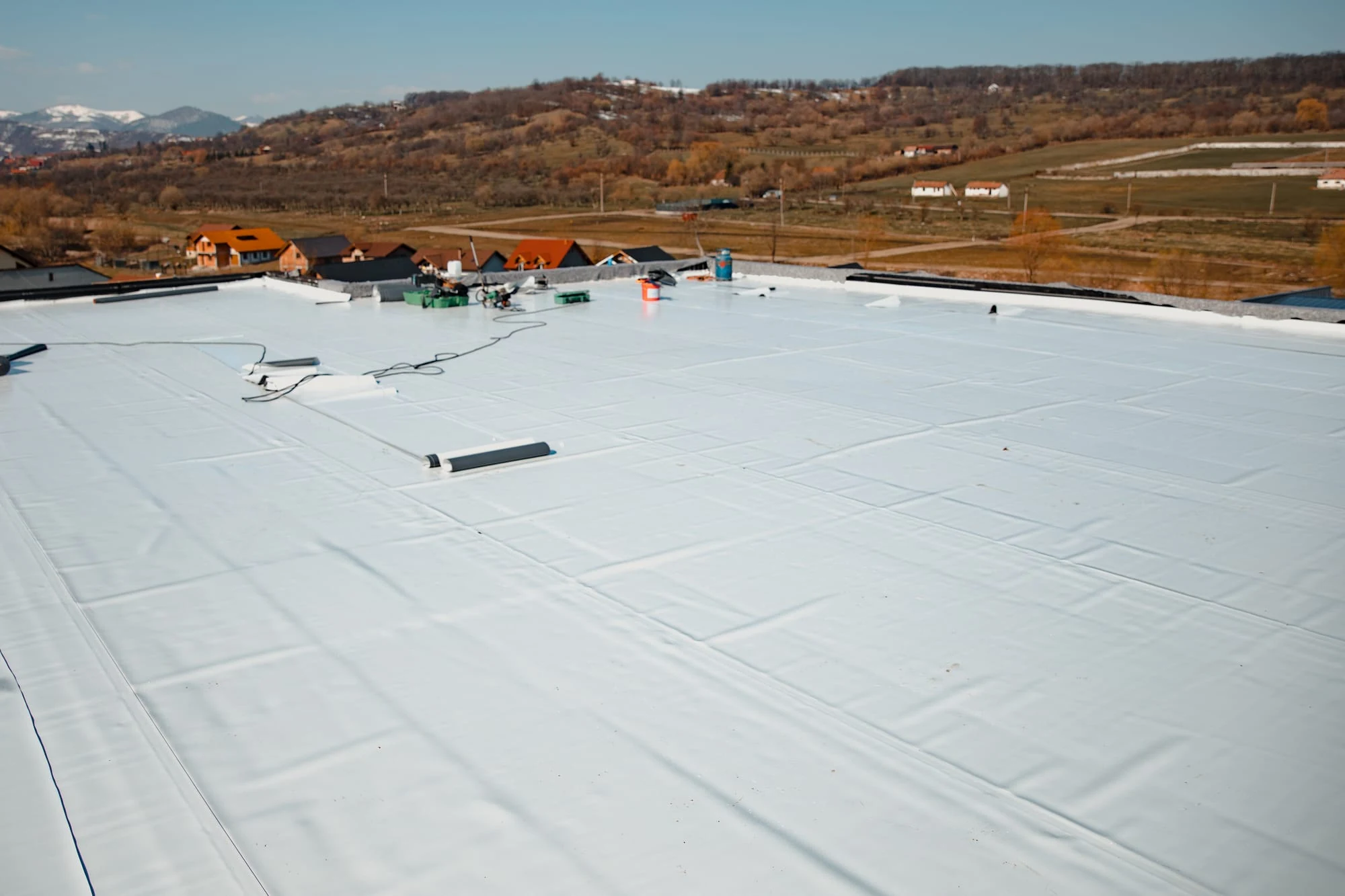
Commercial Roofing Across the Salem Area